Building and maintaining brand trust in the age of AI
Written by Karin Vis

With the rise of AI distrust among consumers is growing exponentially. This means that businesses have to be more aware of their brand trust, and do more to actively improve and maintain it. After all, without brand trust consumers have little reason to spend their money on your product or services instead of your competitor’s.
What is the definition of brand trust?
You will not find a definition for brand trust in the dictionary, and every web search result will give a different answer. Amazon even confuses it with brand loyalty, which though related is not the same thing. My definition of brand trust is this: the confidence consumers have in a brand’s content being truthful and its ability to deliver on its content’s promises.
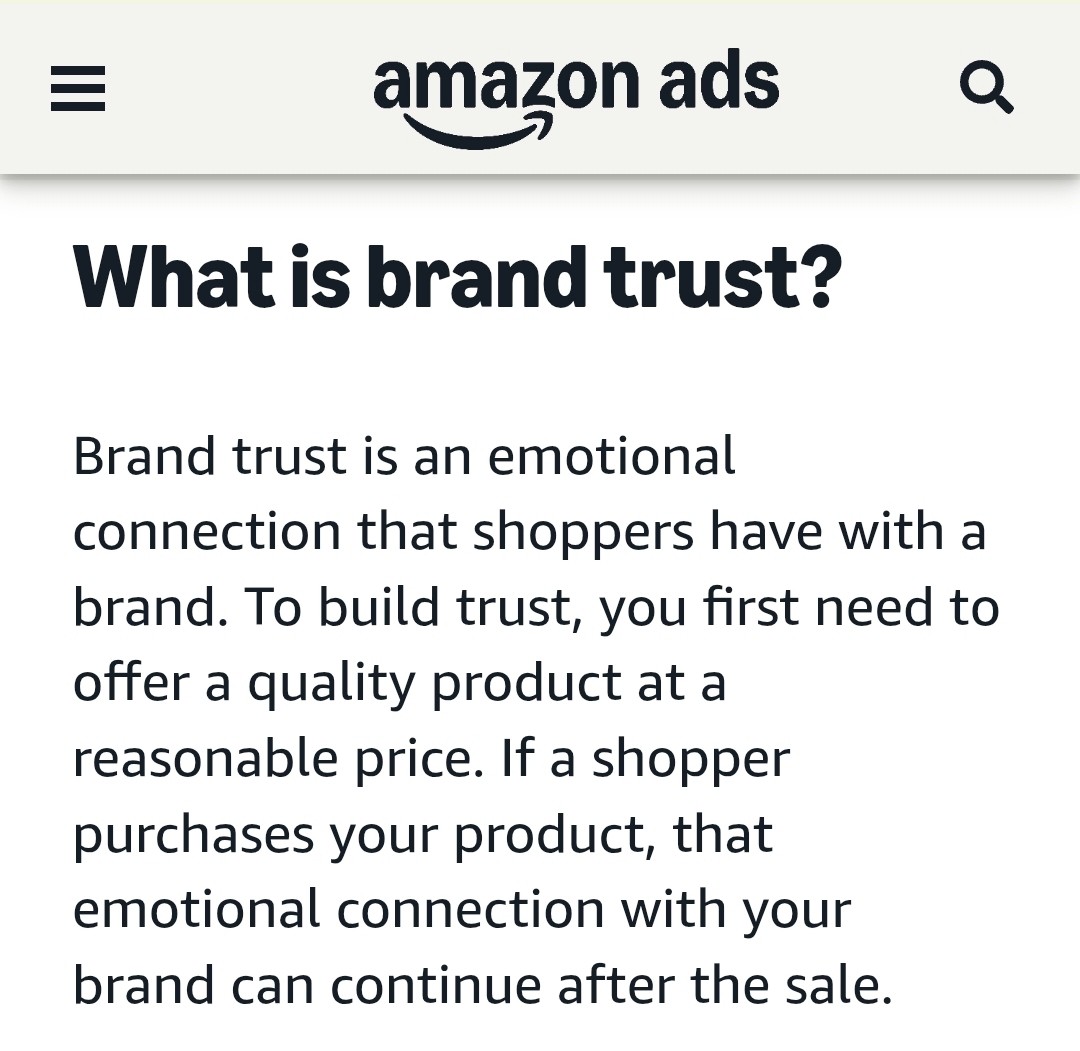
Fig. Screenshot of Amazon’s definition of brand trust.
For my own brand, this means I have to have a way to show that I do not use generative AI. Which is difficult because AI testing websites often get their results wrong. But I handwrite my first drafts with pen and paper; sometimes just the outline and key sentences or ideas other times full articles. My first edits happen as I transcribe my work onto my laptop, while second edits include printing the document and going through it with a red pen.
For businesses in the leisure or creative industries to build and maintain brand trust it is important that they do not overpromise. Presenting your products or services in an honest way, with real photos instead of AI generated slop or over-edited visuals will increase feelings of trust and confidence. For example, crowded tourist locations presented as if visitors will be there alone are unlikely to help the location’s reputation.
The importance of brand trust and the dangers of losing it
Why brand trust is so important might be obvious to you by now. But I have no problem spelling it out all the same. Sustained brand trust will lead to loyal customers who will happily recommend your business to friends and family.
This makes it especially important for new and smaller businesses to build trust as it is an important part of long term business success. It allows for steady growth which is the healthiest way for a company to succeed, and one that actually increases brand trust. The phrase ‘steady as she goes’ still holds true even in the world of viral content.
Losing brand trust is something only massive brands can afford and even then it is can severely hurt their bottom line. Think, for instance, of the American brands that face boycotts due to their cooperation with ICE, like Target and Home Depot. Or Coca-Cola’s AI generated holiday ads, which had people switching to Pepsi, or Duolingo’s AI first policy which saw their stock prices plummet.
Research shows that around 40% of people never again buy from a brand they have lost trust in. For smaller brands that number is disastrous. Which is why brand trust, building it and maintaining it is so important.
How to build brand trust
Studies into brand trust have shown that consumer trust in brands is based on four factors:
Brand image, which comes from a brand’s communication and content.
Customer service, which relates to personal human interactions.
Perceived value, which measures whether the price you have set matches the expectations you raise for the product or service you offer.
Satisfaction, which measures if your product or services live up to the expectations.
Content marketing plays a role in building your brand image and raising your perceived value. A trustworthy brand image requires consistent communication, setting up clear tone of voice guidelines will help you with this. A high perceived value can be reached through transparency, accountability and honesty, which good content and copywriting should give you.
Investing time and money into brand trust is a long term investment. Much like it takes time to trust a person you have only just met, it also takes time for consumers to trust a brand they have just heard of. Though there are ways to speed this along.
Having brand trust often comes with positive reviews. Sharing these on your website or social media is a great way to gain trust with new customers. Well known review websites, like Google, Tripadvisor and Trustpilot, often offer ways to share reviews to your website via an API connection.
How to lose brand trust in the age of AI
If your marketing and communication, and therefore your brand image, becomes untrustworthy, you will lose brand trust. This is happening a lot in this AI age we are in. Consumers can often recognise generative AI use and will call it out publicly.
By now many if not most consumers know that AI hallucinates with confidence. If your content is generated by AI it will instil feelings of dishonesty in consumers even if you label your AI usage. Sprout Social’s Q1 2026 Pulse Survey shows that 40% of Gen Z (born between 1997-2012) is unlikely to engage with AI slop, and 50% actively block brands over AI usage.
And they have a point. Many consumers see brands that publish AI generated material as businesses that do not value their time and attention. After all, why would they give a company their time, attention and money, if that company is unwilling to invest in the content they put out?
But overall, the number 1 answer to what type of content consumers do not want to interact with is unlabeled AI generated content. So if you insist on using it, you should be honest about doing so. If you do not label your AI usage and you are called out by users, do not do what Airbnb did, namely ignoring customer concerns and removing reviews, instead show accountability and address the problem.
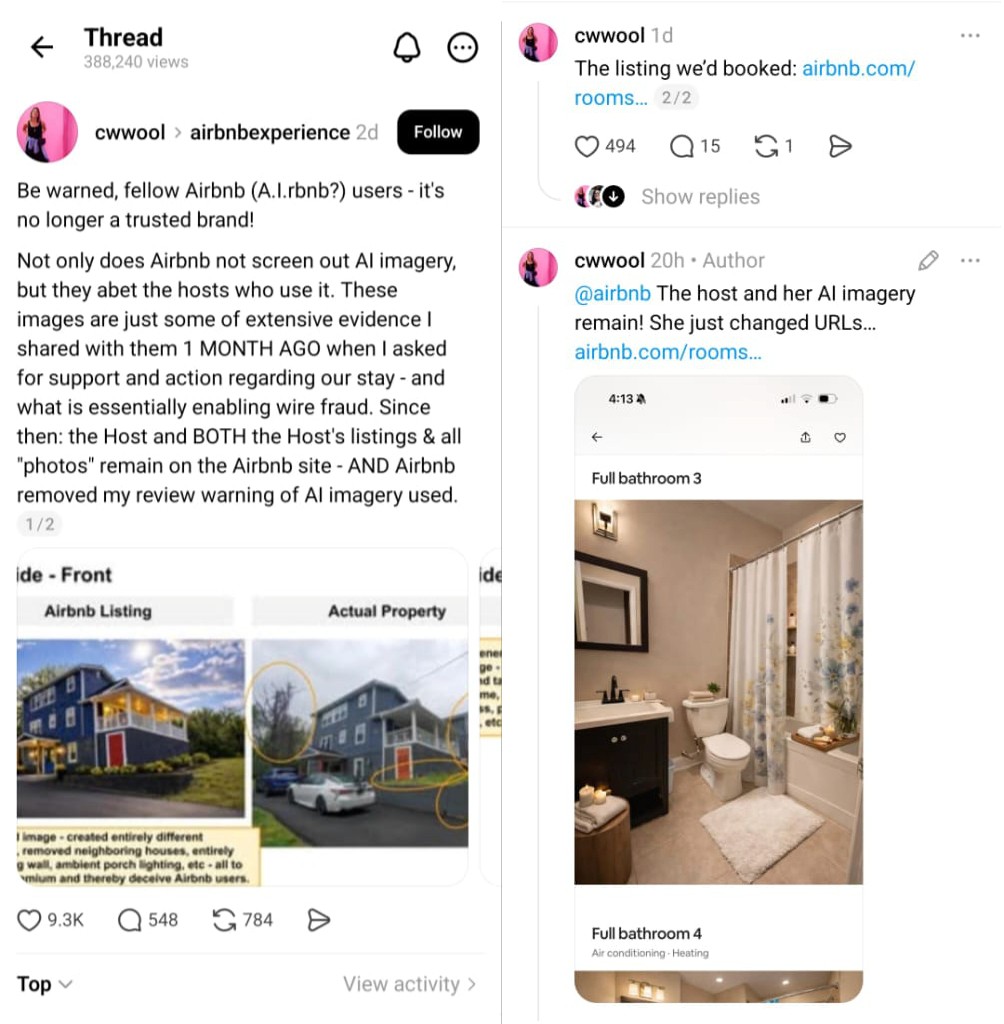
Fig. Screenshot of Threads post showing consumer’s response to Airbnb’s untrustworthy practices taken on 8 May 2026
Of course, there are other ways to lose brand trust beyond using generative AI that you should also avoid, such as failing to deliver on expectations and negative interactions with consumers. Consumers want authentic and human connections even with businesses. Providing these may not be easy or quick or cheap but it is worth the effort, time and money for your business.


Offering English & Dutch SEO copywriting, storytelling, and content marketing services, helping you to inspire and persuade customers to choose you.
© Copyright 2025-2026 The Impactful Quill, All Rights Reserved