Using generative AI for marketing can hurt your branding
The AI backlash
Written by Karin Vis
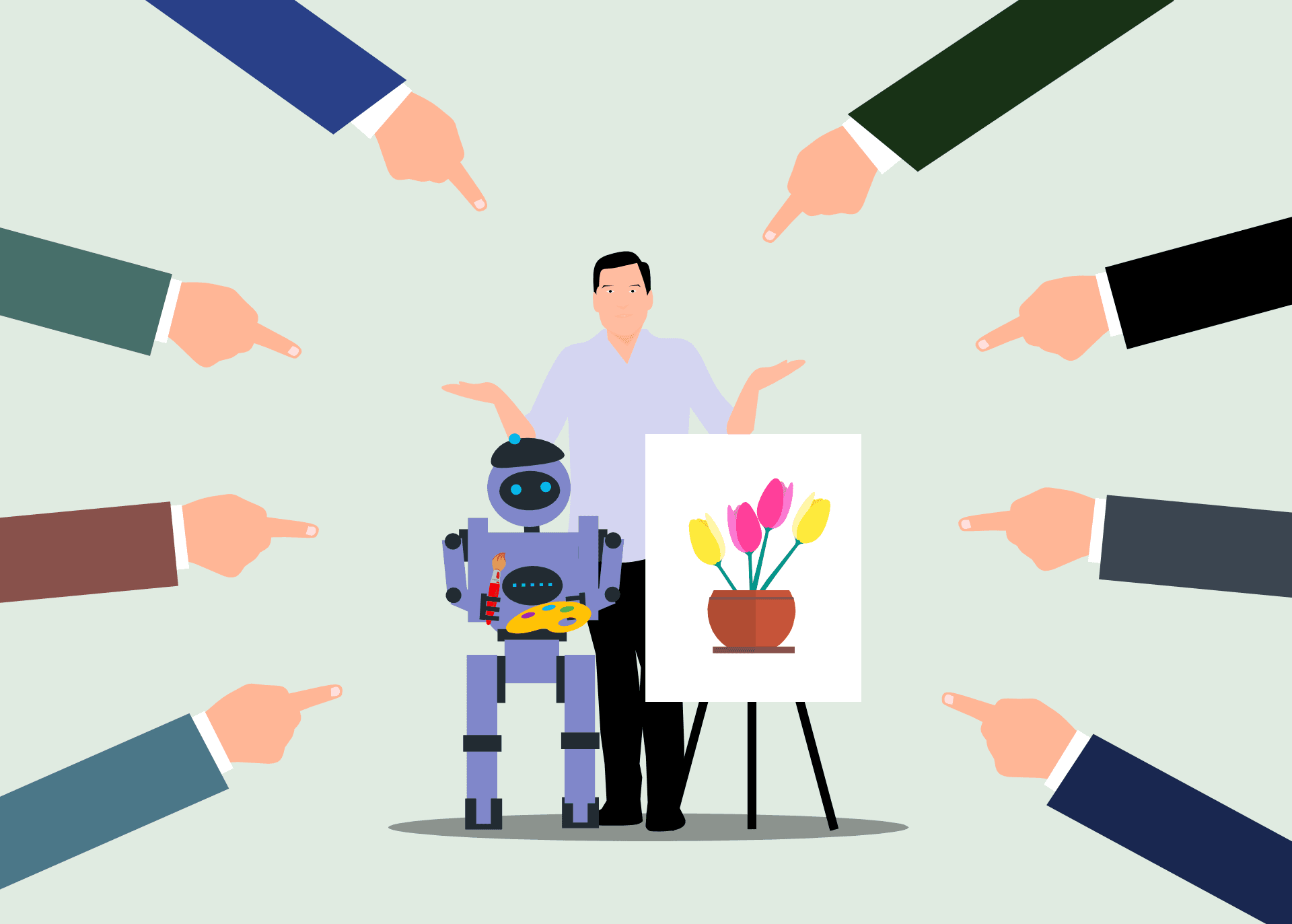
Several big companies that have been caught using generative AI for their marketing have found themselves faced with near instant backlash. Big name brands can and have survived the negative press, even if it has forever become a part of their brand identity in the public’s eye. The negative press is a nuisance to them, one they can afford. If you are considering using generative artificial intelligence for your marketing efforts, you should think about whether your business can afford the negative responses as well.
AI backlash goes viral
With social media algorithms trained to promote and spread controversy, AI backlash goes viral quickly. Often reaching more viewers and higher engagement numbers than the original piece that caused the backlash. This results in companies losing control of the messaging surrounding the content.
McDonald’s AI holiday add
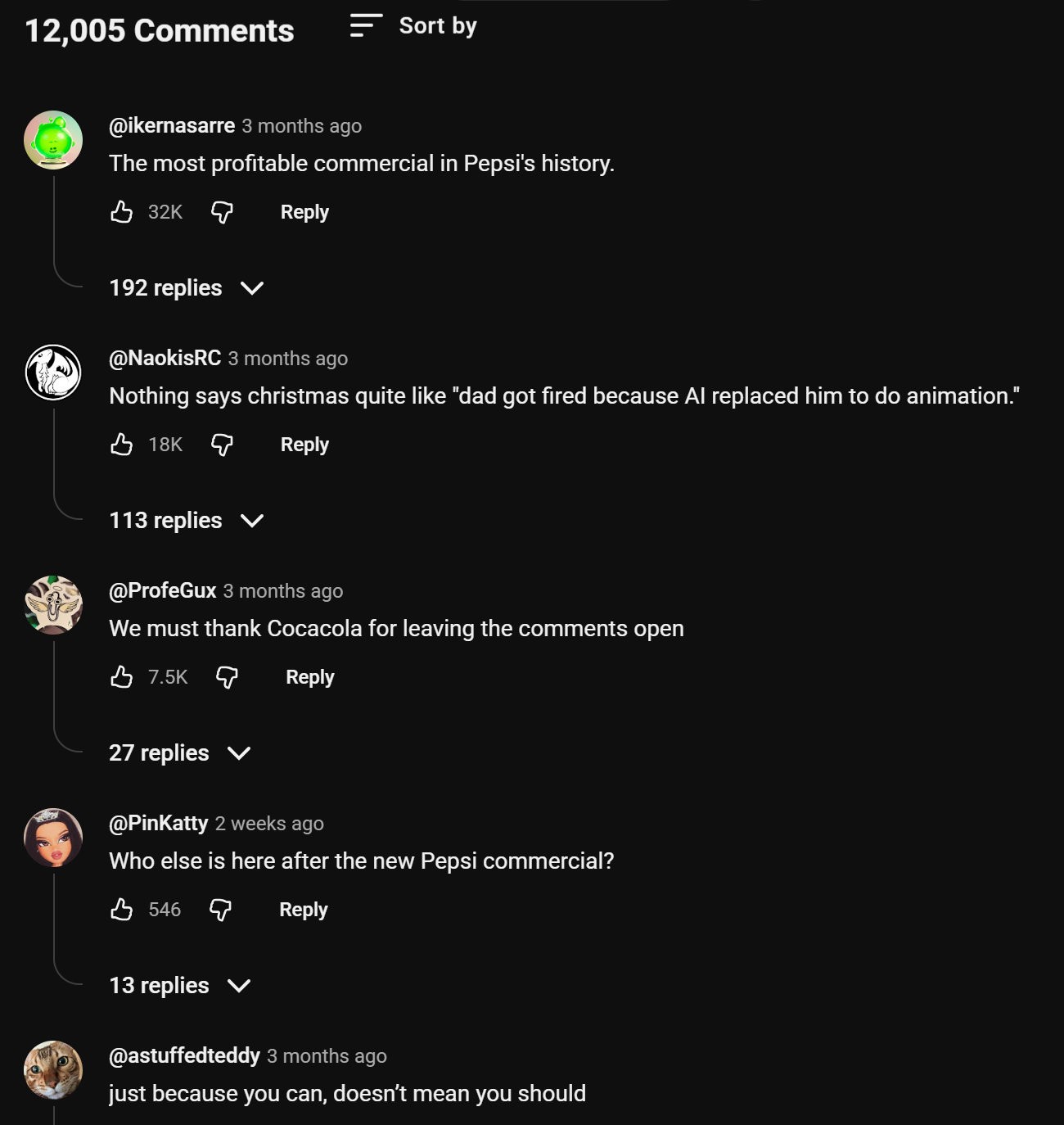
When McDonald’s Netherlands launched its 2025 holiday season ad public outcry quickly followed. Comments were quickly turned off on YouTube as positivity was hard to find amongst the accusations of AI slop. Of course, that only drove the comments elsewhere.
The company took down the video but as we all know, once something is online there is no removing it. The ad has been reposted, analysed, reacted to and reposted again on every social media platform. The original video may only have had 20,000 views but by now millions of people have seen at least parts of the ad, all with negative connotations surrounding their views.
The backlash was so bad that parent company McDonald’s felt the need to make it very clear that this ad was commissioned by McDonald’s Netherlands and not the parent company itself. Insisting that reporters blamed the Netherlands branch for the incident in order to contain the brand damage. “It is important for accuracy that any references to the brand in your story and headline be to ‘McDonald’s Netherlands.”
British Museum (re)posts AI images
On 27 January 2026, the British Museum in London posted four images to Facebook and Instagram, which had been generated by AI. They even tagged two AI accounts with the posts, the AI model and the marketing agency behind it. The British Museum removed the posts after about six hours and a wave of backlash questioning the ethics of museums, that are charged with preserving and showcasing human creativity and history, posting generated material instead of actual human creations.
Much like with McDonald’s, screenshots were made and the story of the British Museum’s use of AI and the negative comments it spawned live on online. In response to a Freedom of Information request the museum revealed that the post had been user-generated content, and was not generated by the Museum itself. The response also stated that the museum is working on guidelines for AI use Museum-wide, however it is unclear if that process was started before the controversy or after.
Coca-Cola doubled down two Christmases in a row
After Coca-Cola produced their 2024 Christmas ad with generative AI they received a ton of backlash. Instead of reverting to human-made content for their 2025 ad, they doubled down and choose to release another generated ad. It had the same negative results, days after the video was posted on YouTube the like to dislike ratio was 1 to 10.
After the 2024 ad was released Pratik Thakar, Coca-Cola’s global VP and head of generative AI, said in an interview with Ad Age “Consumers don’t really look at it like creative directors look at it. Consumers, if the story makes sense, and it entertains them, and it gives information, then it’s good. And that’s what we saw: Consumers were not concerned about AI versus non-AI.”
While the dislike count has been hidden, a look at the comment section under the 2025 ad on YouTube, shows something different to me. And the 2024 Christmas ad is no longer available on Coca-Cola’s own YouTube channel. To me, it is clear that Coca-Cola does not fear the brand damage AI generated marketing material can do, and as a massive global brand they can probably take quite a few hits before the damage is lasting.
Romance 'authors' forced to change pen names
While big brands might be able to weather the storm that follows from using gen-AI, that is not the case for everyone else. In March 2025, three romance ‘authors’ were caught using gen-AI to generate their novels. All three have stopped publishing, at least under the names they had been using.
In February 2026 two romance ‘authors’ were interviewed by the New York Times, both openly discussed using AI to generate their books. Except, they both went by out of use pen names in the article. They might be able to produce a novel in a day, but they will not publicly announce that it was generated by a Large Language Model (LLM). Because once the public is aware gen-AI is used by an ‘author’, the brand of that pen name is dead.
Even authors who have not used gen-AI for their writing and only used it for their cover art, are faced with tremendous backlash online. Readers see it as one creative betraying other creatives, as the generated images are based on the often copyrighted material the Large Language Model of choice has been (often illegally) trained on.
The backlash goes beyond generative AI
With almost every company now promoting some sort of AI feature, people are quickly moving on from being hyped to being oversaturated. Adding an AI feature to your product is no longer making your brand stand out, it just makes you one of the many. And as not everyone is aware of the difference between generative AI and assistive AI, backlash is spreading to companies who add assistive AI to their systems which have nothing to do with gen-AI.
A clear sign of the over-saturation was the online response to the many, many AI ads during the 2026 Superbowl. Viewers felt as if every commercial break had at least one AI ad. Before the first quarter of the game was played, viewers had already been shown two Anthropic commercials as well as multiple others.
When Mozilla announced its new CEO in December 2025, they also announced that they would be adding AI to their browser. Users were not happy and many announced they would be switching browsers. Now Mozilla have announced that they will add an AI kill switch but many users are still unhappy as they believe consent should be asked up front, instead of forcing people to use an opt-out.
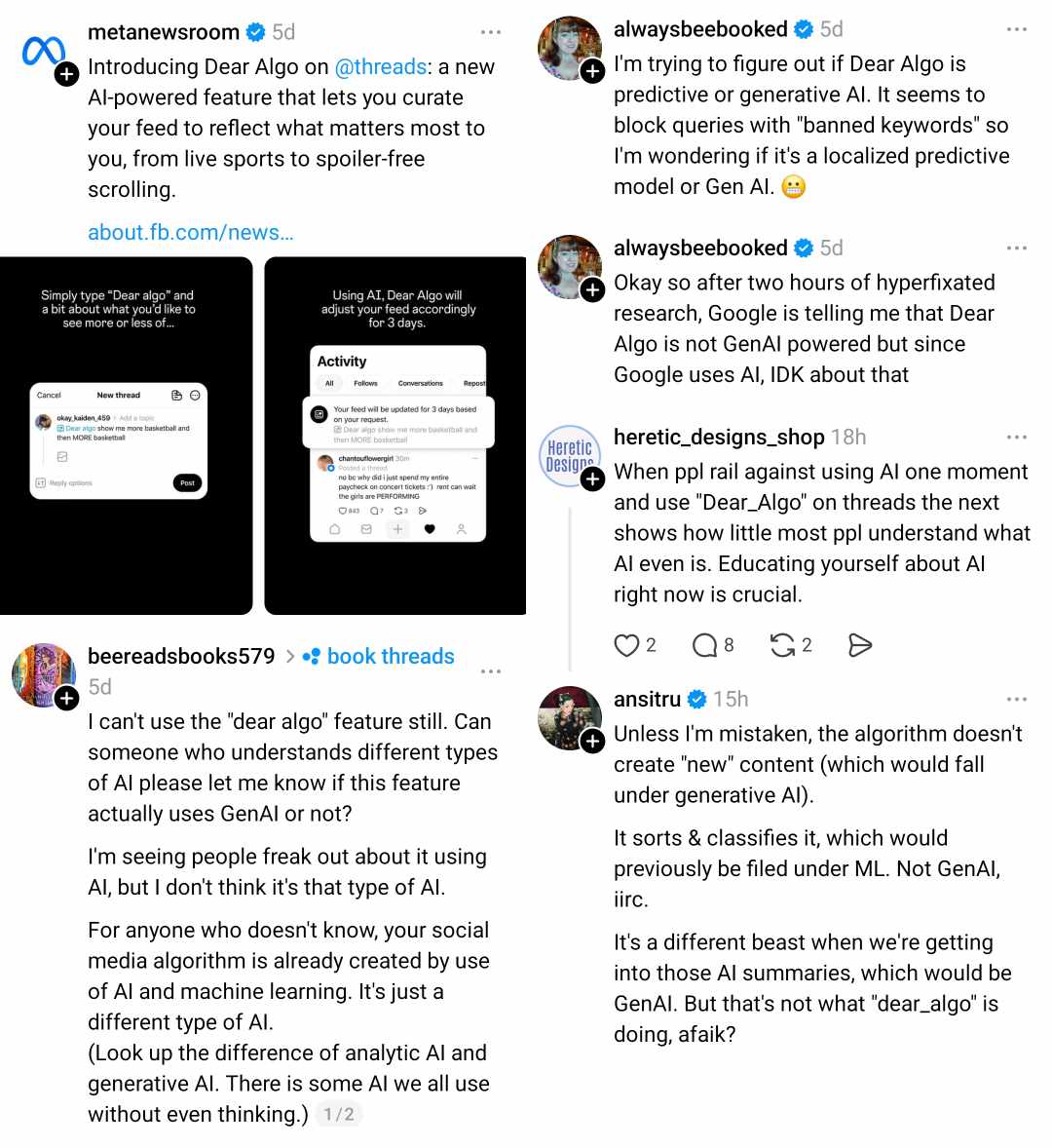
And when Threads announced its new Dear Algo AI tool to help users take control of their feed, some users feared it was gen-AI and refused to use it. Causing discussions on what is gen-AI or assistive AI. The social media platform could have avoided the user trepidation by not calling the tool a feature instead of AI.
Banning or disavowing gen-AI is celebrated
On the opposite side of all the backlash, are the companies and brands that have banned gen-AI. They are celebrated by many (except by the tech bros who need gen-AI to succeed). The positive reaction is especially visible in the creative industries but is not limited to it.
While Coca-Cola and McDonald’s Netherlands were releasing AI slop for their holiday season marketing, Porsche chose to release a commercial that used both hand drawn art and 3D animation. Without even mentioning AI, Porsche was celebrated for not using it.
And while users are hard pressed to escape AI generated music on platforms like Spotify and YouTube Music, Bandcamp has banned it completely. If you want to explore new artists on the bigger apps, you are bound to hear AI music even if you do not want to as there is no way to filter it out or report it. The reactions to Bandcamp’s announcement on Reddit have been positive and joyous.
In the comic book industry it is DC Comics that has taken a stand against the technology. At New York Comic Con, president and publisher Jim Lee stated that DC Comics will “not support AI generated storytelling or artwork [while] Anne DePies and I are in charge”. This is in contrast to Marvel, who received backlash at the Los Angeles Comic Con for resurrecting Stan Lee with an AI-powered hologram.
Speaking of Comic Cons, the biggest and best known of all, San Diego Comic Con banned AI art as well. There was no big announcement, they simply and quietly updated their policy. However, the change was in response to backlash, none the less the change was overwhelmingly well received by artists.
Why you should care about AI backlash
Consumers do not want an AI sloppification of the content they consume, whether that is marketing material or otherwise. Companies that do use generative AI for creative expressions often face backlash, while companies who pay human creatives can find themselves celebrated, especially if their competitor goes the AI route.
Your brand is what sets your company apart from your competitors. If you and your competitors all use generative AI for your branding material, there will be no difference between your branding as AI generated content becomes more homogenous over time. To stand out you need human-created content, which comes with the added benefit of not including AI backlash.
If the promises from the tech oligarchy that AI will replace most or all white collar jobs come true, we are all in trouble. Companies may save money by using AI, but consumers will not be able to afford products and services any more when they are unemployed. Not using gen-AI in your business is a net positive approach to doing business, one where people get to keep their jobs and businesses can continue to sell their products and services.

Offering English & Dutch SEO copywriting, storytelling, and content marketing services, helping you to inspire and persuade customers to choose you.
© Copyright 2025-2026 The Impactful Quill, All Rights Reserved