Create content for the different stages of the customer journey
Written by Karin Vis
It is not often that customers travel through the entire customer journey based on one interaction with a brand. More often, there are multiple moments spaced out over several days if not longer periods that draw customers through the different stages. You want to have the right piece of content for each interaction with your customer, which is tricky and takes time to set up properly.
What is the customer journey?
The customer journey is a series of interactions and experiences someone has with a brand that takes them from first becoming aware of the brand’s existence to them becoming a returning customer who promotes the brand. Marketers have defined several different stages throughout the customer journey. Though there is no agreement on how many stages there are, usually four to six, or what they are called.
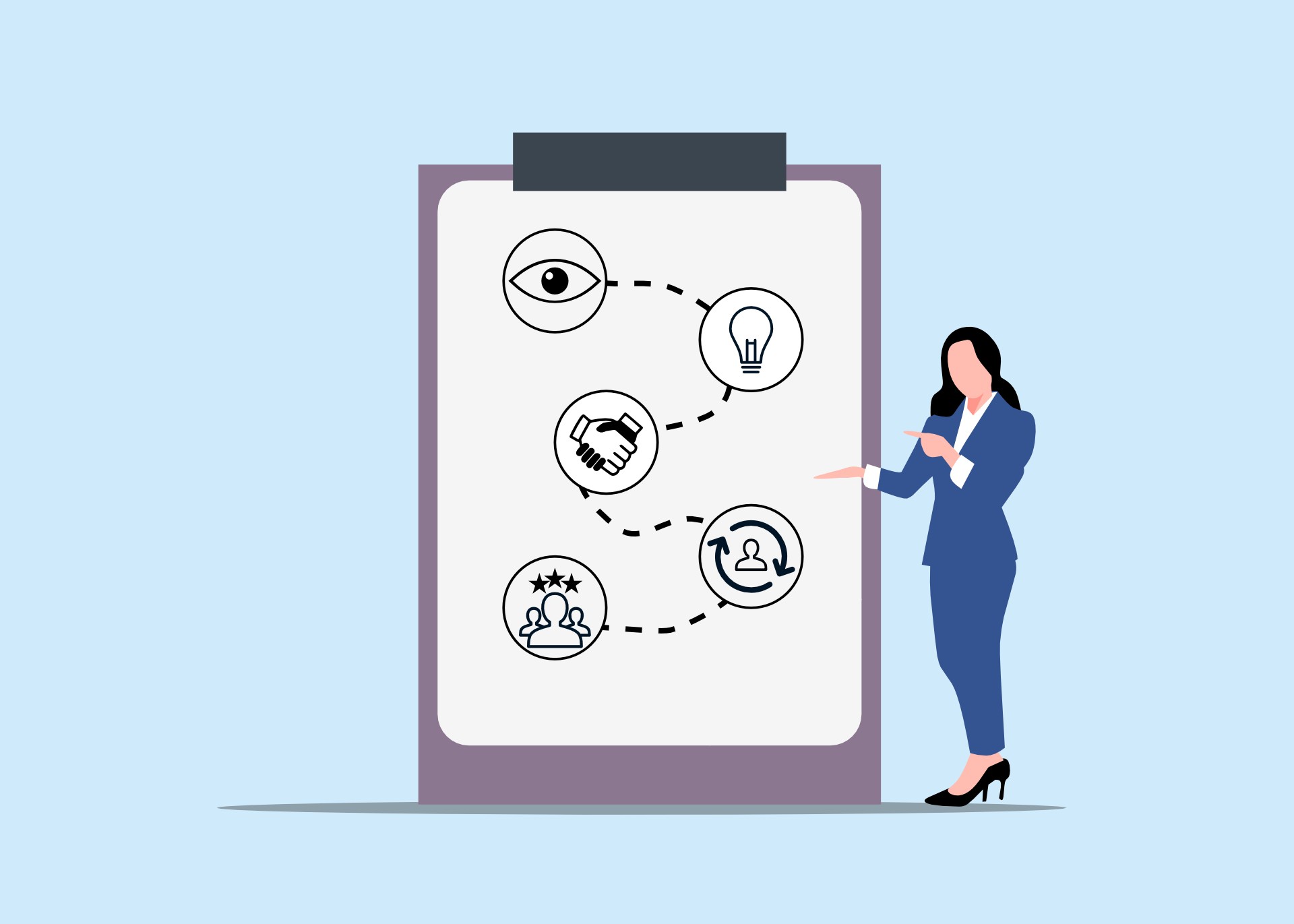
These are the 5 customer journey stages as I see them:
Awareness: this are the customer’s first interactions with your brand, creating awareness of its existence.
Consideration: here customers consider what you have to offer and compare it to other options.
Purchase, also known as acquisition or conversion: the customer buys or uses your product or service.
Retention: next comes the step where clients become returning customers.
Advocacy: the client will recommend your brand to others.
Types of content per customer journey stage
Each stage in the customer journey requires a different type of content. Here are some examples of types of content that you can create to make sure that your target audience can find you throughout their journey. For clarity, I will include some ideas and topics that have worked for my tourism clients but can be adjusted for other industries.
1. Awareness stage content ideas
At the first points of contact you are trying to create brand awareness with your content by connecting your business name and the product(s) or service(s) you provide to related ideas and activities. Content types that you can create for this stage include blog posts, social media posts and ads. All pieces of content that customers come across in their daily life or find through an intentional web search.
You want this content to be informational, and while it should always be related to your products or services the relation can be loose. Examples for tourism and leisure brands would be content that promotes their location or type of product in general, like a ‘top things to do in’ content piece or ‘why everyone should try this experience’. The purpose of the content in the awareness stage is to inspire and inform, not necessarily to convert people straight into customers.
2. Types of content for the consideration stage
The people that are aware of your business may need some convincing to spend their money on your product or service. This is the consideration stage, where you need content that sets you apart from your competition and is optimised for a commercial search intent. This content should show off your product or service, your reliability and be clear on what you offer; it should answer the question ‘why consumers should choose your business’.
Content that works for the consideration stage includes landing and product pages (remember to add pricing information, especially in the B2C market), brochures or flyers, product promotions and reviews, and user generated content. Which type of content specifically works for you will depend on your business, a content marketer can advise you on this.
3. Purchase stage content should be kept simple
Once you have convinced your customer to choose your product or service, you want as few roadblocks as possible in their way towards the actual conversion. Micro content is important here and so is the payment portal design. Each step (and there should be as few as possible) in the purchase process should be clearly marked and simple to complete, as a convoluted process can make people abandon their purchase.
If you want, you can offer add-ons at this stage, but the offer should not be intrusive. The design of the payment process is what will or will not allow you to offer add-ons, as you want them to be visible, attractive and clear but not turn away customers. The design for this is something you may want to consider A/B-testing.
4 & 5. Content for the retention and advocacy stage
Content aimed at turning customers into regulars and advocates starts with the first message they see after completing their purchase. For online purchases this is usually the ‘thank you’ page and the ticket or confirmation email. While you can use the ‘thank you’ page to upsell more products, this is not always possible for the ticket or confirmation email due to local regulations.
If you operate in the E.U. you have to follow the GDPR (General Data Protection Regulation), which plays a larger role in the retention and advocacy stage – though it is also important for earlier stages, especially concerning website cookies. According to the GDPR, businesses can only send consumers marketing material (on- or offline) if the consumer has given their consent to doing so. Upselling falls under marketing content and so cannot be included in the ticket or confirmation email if the consumer has not consented to receiving marketing information.
What you can include in the ticket and confirmation email is a link to sign up to your newsletter. If your newsletter contains valuable information and inspiration, such as in the awareness stage content, and you communicate this properly, consumers will want to sign up for it. For instance, post purchase inspirational content for tourism include ‘other things to do near us’ or ‘how to prepare for your experience’.
Important to note is that emails requesting reviews and offering updates on the already made purchase are not considered marketing emails, which means you can send those without prior consent. Beyond marketing and informational emails, retention and advocacy content also includes things like loyalty programmes. These allow you to offer discounts to returning customers or for bringing in new customers.
How a marketer can help with your customer journey content
A content marketer can help you by creating a customer journey map, mapping out all the different contact moments you have with your customers and creating a content plan with to create the information they need at each moment. It is also possible to ask for a site audit of the user experience, so that the marketer can indicate which information is missing or what pieces of content can be improved upon. Finally, the content marketer can help you to actually do the work of writing, creating and improving the material.

Offering English & Dutch SEO copywriting, storytelling, and content marketing services, helping you to inspire and persuade customers to choose you.
© Copyright 2025-2026 The Impactful Quill, All Rights Reserved